
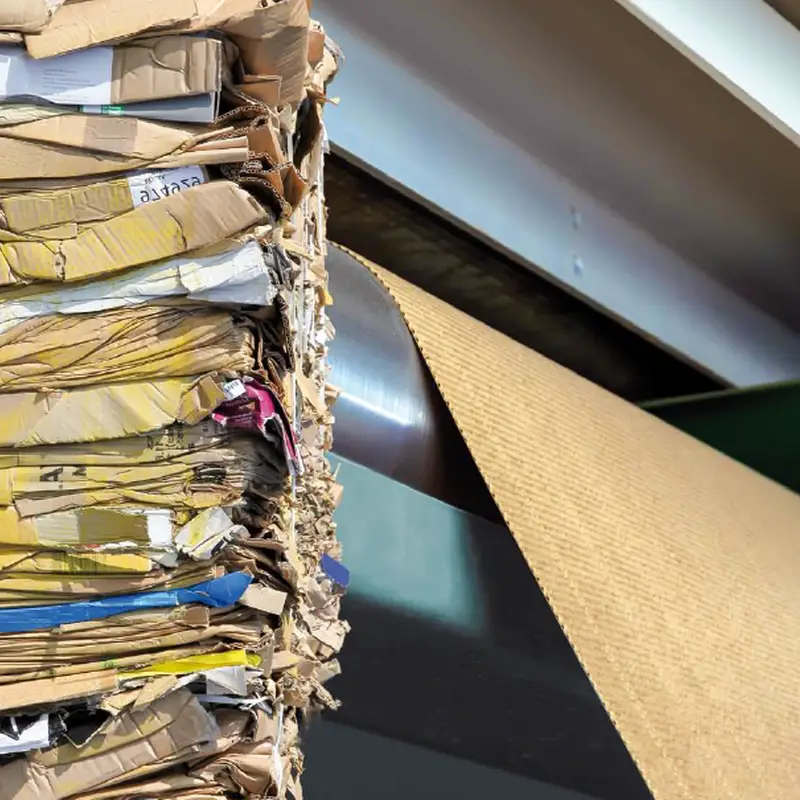
Description
Course features
- Teletraining hours: 40 h
- Live streaming classes with the instructor
- Duration: 3 months
- 3-4 hours per week
- Start date: November 11, 2026
Objectives
- Identify and classify the main sources of waste generation in the corrugator.
- Analyze the technical causes of recurring defects such as delamination and warp (simple or S-warp), formation of bubbles, blisters and wrinkles, and establish correlations with operating variables (temperature, humidity, pressure, adhesive, paper, etc.).
- Evaluate the effects of mechanical deviations (leveling, parallelism, eccentricities, misalignment in knives or cylinders) on board quality and process efficiency.
- Apply technical diagnostic procedures to detect critical points of productivity loss through component inspection (cylinders, glue unit, belts, slitter, stacker…) and analysis of process parameters.
- Establish process controls and inspection routines aimed at reducing specific waste in each functional unit of the corrugator: corrugating unit, double backer, hot plate section, slitter, cutoff, stacker, etc.
- Integrate knowledge of paper behaviour, adhesive and operating conditions into operational decision-making to minimise variability and associated defects.
- Incorporate continuous improvement methodologies in waste detection, recording and analysis, promoting traceability and agile technical response to recurring issues.
Methodology used
The methodology can be delivered in online and blended formats. The online programme combines recorded video modules with live classes with the instructor, practical case-solving and assessment exams.
During each module, scheduled live online sessions are delivered, covering cross-cutting topics, resolving proposed cases, and giving participants the opportunity to raise questions or discuss specific cases.
Attendance at these sessions is mandatory.
Full course syllabus !
1.- Waste in the corrugator
- Causes
- Waste control procedures
2.- Waste in the Wet End caused by
- Paper and reels
- Damaged layers
- Splicers
- On the rise to the bridge, bridge and preheaters
3.- Waste due to delaminated board in the corrugating group, caused by
- Inadequate paper heating
- Adhesive
- Corrugating rolls and pressure section
- Glue unit
- In the manufacturing process
4.- Waste due to delaminated board in the double backer and hot plate section
- Adhesive and heat
- Bridge brake and infeed to the hot plates
- In triple wall
- Belts and board moisture
- Hot plates and pressure system
5.- Waste due to board
- Warp
- Concave or convex
- Longitudinal and edge warp
- Moisture imbalance
6.- Waste due to S-warp board, caused by
- Paper
- Eccentricities in the glue system
- Doctor blade and splashing
- Post-warping
7.- Waste due to formation of bubbles, blisters and wrinkles
- Leveling and parallelism
- Bubbles and wrinkles on the bridge and bridge brake
- Surface bubbles and wrinkles
- Honeycomb and flute marking
8.- Waste in the Dry End
- On the rotary shear or rotary cutoff
- Scores
- Knives and cuts
- Cut -Off. Feeding unit
- Cut -Off. Knives and outfeed
- Dimensions, caliper and storage