
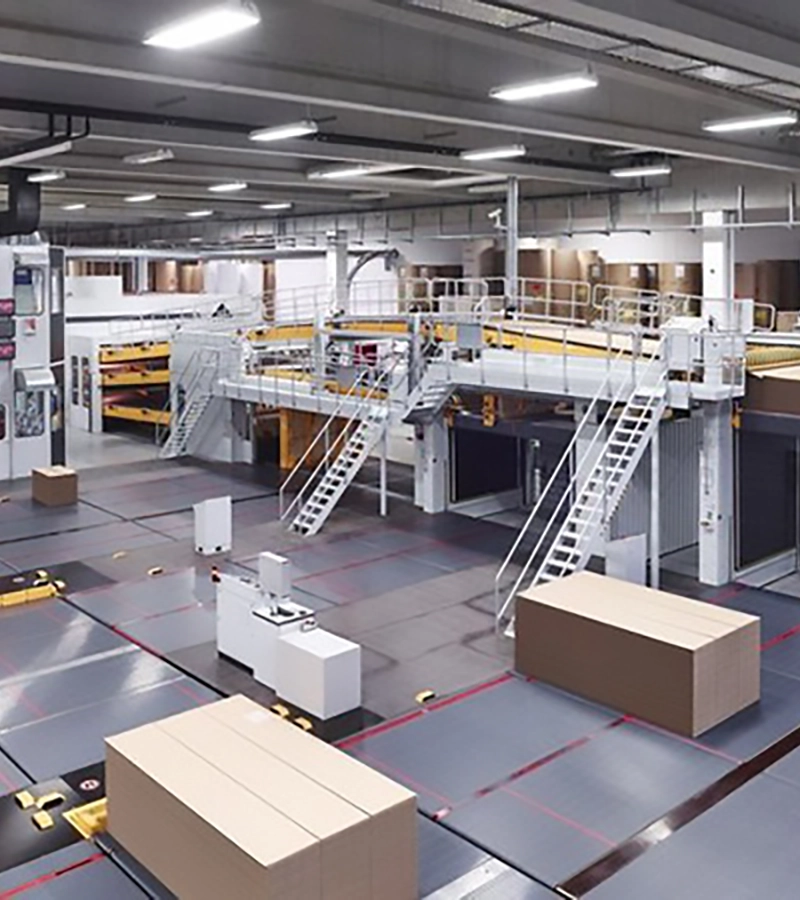
Description
Course features
- Online Training Hours: 75 hours
- Live streaming sessions with the instructor
- Duration: 4 months
- Start date: April 7, 2026
Objectives
The objective is to thoroughly understand each component of the machinery involved in the manufacturing process, the raw materials used (adhesives, paper, and steam), their impact on the process, and the issues that arise when parameters are not maintained.
Students will develop a deep understanding of the corrugated board manufacturing process and acquire the skills to analyze, identify, and resolve the daily challenges encountered on the corrugator.
Methodology
The methodology is available in both online and blended formats. The online program integrates recorded video modules with live instructor-led sessions, practical case studies, and evaluation exams.
Each module includes scheduled telepresence sessions, where cross-disciplinary topics are addressed, proposed cases are analyzed, and students can ask questions or discuss specifi c scenarios. Attendance at these sessions is mandatory.
Full Course Syllabus!
1.- The corrugator box
- Definition and general characteristics
- Structural characteristics
2.- Starch adhesives
- How a starch adhesive works technically in the corrugator
- Starch-based glue
- Gelatinization of starch
- Water in glues
- Caustic soda and borax
- Bactericides and other additives
- Viscosity, stability, and solids%
- Gel point, texture, and wettability
- Glue kitchens
- Types of starch glues
- Bonding Phases on the Machine
- Viscosity troubleshooting
- Glue application defects
- Starch footprints / Iodine pictures
3.- Paper at the corrugator
- Wood, cellulose, and fiber types
- Types of paper manufacturing processes
– Mechanical, Chemical & Semi-Chemical - Production of recycled paper:
– Collection, baling, and classifi cation
– Pulper, purifi cation, and hot dispersion
– Refiners (screening) and cyclonic separators (cleaning)
– The paper machine: Paper reel formation - Manufacturing of virgin fiber paper
- The paper machine, high efficiency
– Virgin fiber liners
– Recycled fiber liners
– Coated liners - Parameters to control at the corrugator by liner papers:
– Their usage range and moisture profile
– Temperature
– Tension, grammage, thickness, and splices - Fluting (medium) papers
- Parameters to control at the corrugator:
– Porosity, water absorption & shrinkage
– Fiber orientation - Cardboard combinations and types
4.- Wet-End. Single-Facer Groups
- Definition and structure of the corrugator
- Types of Single Facers
– Finger, vacuum & overpressure. - Corrugating rolls
– Types of flutes and profiles
– The manufacturing process and treatments - Flute-forming systems and their importance
- Diameter, duration (live time), and lubrication
- Working pressure and heating
– Assembly, lubrication, and periodic checks - Corrugating cylinders and selection criteria
- Single Facer groups with smooth press
– Smooth press, vibrations, and other issues - Smooth press, Crown, and traction
- Single Facer groups without smooth press
- Complete corrugator without smooth press
- Corrugating groups. Glue application / Glue-Unit
– Anilox cylinders, Fabrication, and cleaning. - Anilox cylinders, Damage, and wear
– Doctor roll and scraper blade
– Glue application: glue gap, application (paper) gap
– Glue Tray, level, cooling, and glue dams
– Verifications and adjustments of the glue system - Humidifiers, humidification, steam showers, steam plates, and steam bars
- Preheaters
– Integrated and flat preheaters - Soundproofing booths
- Reel stands and splicers
5.- Wet-End. Bridge, Triple-Pre-heater, Glue Unit, and Double facer.
- Bridge Storage/Level
- Bridge Brake
- Web Guide
- Glue-Unit
- Characteristics
- Gluing system
- Glue application systems (pressure or gap control)
- Common problems
- Double Facer: Pressure cylinder or pads
- Infeed double backer (facer)
- Double backer (Facer):
- Description and its components
- DF Belts / Blankets
- Hot plates
- Pressure systems
- Working curves, ascending and descending
- Traction systems
- Configuration and equipment
- Fast-running Corrugator / short orders
6.- Steam
- Heating systems in the corrugators
- Steam boilers
- Types of Steam Circuits in the Corrugator
- Pipe installation
- Closed circuits
- Drainage through spirals
- Steam traps, ball fl oat traps,
- Drainage by thermostatic and thermodynamic traps
- Steam pumps
- Maintenance and control of the system
7.-The corrugator: Dry-End
- Waste evacuation and order change: Rotary Shear (Taper)
- Types of Slitter-Scorers (Length cuts & scores)
- Cutting types and blades
- Types of counter blades or supports for the blades
- Scoring: types and characteristics
- Trim master, Cardboard side guide control
- Order or Quality change
- Cut-off (Cross cut)
- Stackers: parts of a stacker
- Waste and formation of false scores in the stacker
- Waste and problems with pile formation in the stacker
8. Process control and wate in the corrugator
- Waste in the corrugator
- Paper reels
- Damaged layers
- Paper reel cores
- Splicers
- Dry-end, Rotary shear, slitter scorer, cut off, and stacker
- Waste from unbonding board
- At the single facers
- At the double facer
- Waste from unbonding board: blisters
- Waste from cracked bonding: bubbles and wrinkles
- Waste from warped corrugated board
- Waste due to corrugated board moisture: moisture control
- Waste from trim
- Waste from poor pile formation, in the storage, and overproduction
- Annual plan for waste reduction
- Waste collection systems
9. The cardboard box - tests
- Tests on paper and cardboard
- ECT and BCT
- Differences between dynamic and static compression
- Compression losses during the manufacturing process
- Agriculture deleted
10.- Preprinting
- Types of printing
- Preparation at the corrugator
11.- Corrugator effluent treatment - reuse
- Reuse of the wash water of the glue unit
- Chemical and physical treatment
12.- Production units
- Definition, implementation, and support tools
- Production units, support tools.
13.- Maintenance
- Maintenance in a corrugated board plant