
Description
Course features
Training hours: 16 h
On-site format
Duration: 2 days
Dates: November 2026
- Objectives
Train participants to diagnose and resolve critical failures (cutting, bonding, tension, parallelism, air quality, reel condition and peripherals), ensuring process continuity and final product quality. - Ensure maximum productivity and waste reduction in the corrugator through full understanding of splicer operation, correct reel preparation and precise adjustment of brakes, accumulators and gluing systems.Understand the function of splicers in continuous processes and their relationship with final product quality.
- Identify components, controls and operating sequences of splicing systems.
- Manage brake control, accumulators and automation systems (PLC), applying basic calculations and adjusting technical parameters.
- Apply operational and safety recommendations in machinery operation.
- Analyse collected information to detect incidents, optimise processes and reduce stoppages or defects.
Methodology used
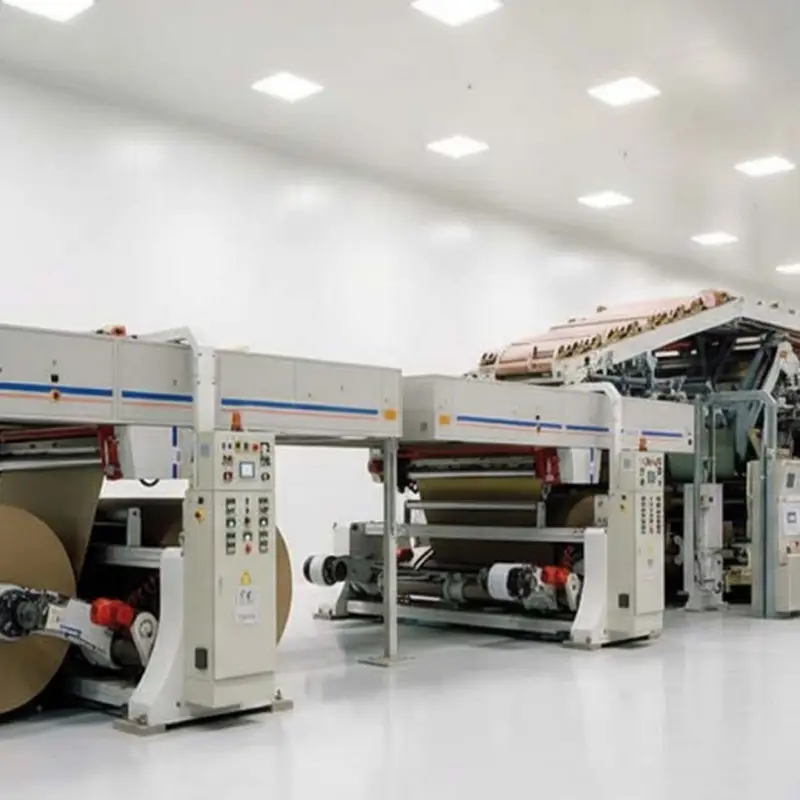
The training is delivered in on-site format at the MTORRES facilities (Pamplona), combining classroom-based theoretical sessions with plant practice on real equipment.
Day 1
• Morning (Classroom)
– Splicer optimisation in the corrugator: reliability, continuity and production efficiency.
– Complete theoretical description of the splicer, its components and operation. Differences between typologies and technologies will be included.
– Detection of typical problems through digital tools, with practical examples and alternation between classroom and plant.
• Afternoon (Plant)
– Splicer maintenance, identification and definition of typical problems.
– Practical problem-solving cases in the plant, with access to real machines and spare parts for direct handling.
Day 2
• (Plant). Morning and afternoon
– Splicer maintenance, identification and definition of typical problems.
– Practical problem-solving cases in the plant, with access to real machines and spare parts for direct handling.
Participants will actively work on the equipment, simulating common incidents and applying corrective procedures in a real production environment.
Full Course syllabus
1.- Splicers and the corrugator
Impact of splicers on productivity and waste in the corrugator
Splicer operational failures
Poor quality pneumatic circuits and compressed air supply
Levelling and parallelism issues between the splicer, reelstands and preheaters
Paper reel-related problems
Malfunction and incorrect adjustments of peripherals, reelstands and preheaters
2.- CTS Splicer description
Principle of glue-free overlapping splice.
Splicing unit and control types (pneumatic and electronic).
Additional elements: double accumulator, flywheel, touch screen.
3.- Components and technical schematics
Frames, glue arms, cutting systems and rollers.
Pneumatic schematics and basic operating sequences.
New reel preparation and gluing sequence.
4.- Brake and accumulator control
Brake systems (pneumatic and electronic).
Web tension management.
Acceleration sequence and operation of single and double accumulators.
5.- Automation and PLC
Siemens Step-5 and Step-7 automation.
Touch screen configuration, PID control and correction factors.
Automated splicing and acceleration sequences.
6.- Calculations and technical parameters
Theoretical brake calculation (diameter, tension and TAPPI tables).
Diameter determination using encoders and pulse detectors.
PID control adjustments and pressure ramps.
7.- Splicing sequences
Comparison between traditional and new methods.
Minimisation of defects (slackness, blisters and tension variations).
Detailed automatic splicing sequence.
8.- Operational adjustments and recommendations
Pressure and ramp adjustments according to reel width and type.
Threshold configuration in the control system.
Practical application of adjustments in the plant
9.- Safety and working conditions
Inhibition protocols, emergency stop and emergency management.
Identification and maintenance of sensors, detectors and solenoid valves.
10.- Practical plant case studies
Diagnosis and resolution of frequent incidents
Errors in diameter calculation.
Reel centring failure.
Automatic loading sequence.
Photocells and automatic splicing
11.- Data capture and analysis tools
Importance of data capture in production processes.
Methods and tools for data acquisition and processing.
Visualisation and analysis for incident detection.
Use of data to support continuous improvement and overall plant efficiency.


